Ergonomic and Organized: Designing Workspaces That Work
Creating an efficient and healthy office starts with the union of ergonomic design and smart organization. Well-designed workspaces are more than visually appealing; they promote productivity, prevent injuries, and foster a culture of well-being. To achieve a high-performing environment, implementing ergonomic strategies alongside effective office organization solutions is crucial. For those seeking expert assistance, professional office organization services can help create spaces tailored to your team’s unique needs.
An optimized office enhances time management, reduces stress, and boosts employee satisfaction by providing tailored workspaces that feature appropriate furniture, storage, and layouts. Incorporating biophilic elements enhances productivity and morale, while flexible layouts facilitate adaptability in tasks. Thoughtful ergonomics, organization, and technology contribute to successful workspace design, ultimately affecting overall business success positively.
Importance of Ergonomic Design
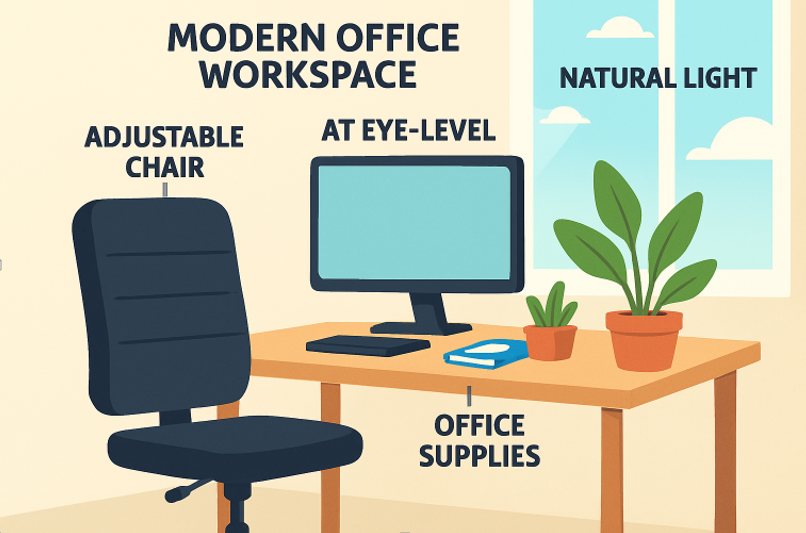
Ergonomic design is an evidence-backed approach to creating workplaces that reduce strain and optimize human well-being. According to the Centers for Disease Control and Prevention (CDC), ergonomic interventions significantly decrease musculoskeletal disorders (MSDs) and associated absenteeism. These disorders, caused by repetitive motion and poor posture, result in billions of dollars in lost productivity annually. By outfitting offices with adjustable chairs, sit-stand desks, and strategically placed equipment, organizations can prevent injuries before they start. Regular ergonomic assessments and employee education on posture further reinforce a culture of wellness.
Organizational Strategies for Efficiency
Orderly environments foster mental clarity and operational efficiency. Well-organized workspaces eliminate clutter, enhance focus, and streamline task completion. Using designated zones for specific functions, labeled storage, and digital document management systems reduces the time spent searching for materials, enabling teams to collaborate effectively. Reimagining workflow processes and decluttering spaces are vital to meeting the demands of today’s fast-paced business world. Creating clear pathways and reducing unnecessary distractions allows each person to perform at their best, reduces stress, and supports ongoing organizational growth.
Incorporating Biophilic Elements
Biophilic design weaves natural elements—such as indoor plants, abundant natural light, and subtle water features—into the modern workspace to create environments that feel both restorative and inspiring. Backed by extensive psychological and physiological research, this approach demonstrates that regular exposure to nature can sharpen focus, stimulate creativity, and support overall well-being. Thoughtfully designed biophilic spaces have also been shown to deliver measurable gains in workplace productivity and employee satisfaction. Features such as living walls, expansive window views, and materials that mimic natural textures enhance the visual appeal of an office, while also strengthening employee engagement and retention. Importantly, these enhancements can be implemented in practical, cost-effective ways, such as adding strategically placed greenery or incorporating artwork that reflects natural landscapes.
Flexible and Adaptable Workstations
Modern workplaces thrive on flexibility. Activity-based working (ABW), which offers a range of work settings tailored to various tasks, enables employees to select their preferred environment according to their immediate needs. This adaptive approach increases job satisfaction and supports collaboration and innovation. Open-plan zones, quiet focus areas, and collaborative lounges cater to a diverse range of work styles and group sizes, providing a flexible workspace that suits everyone. Managers who adopt ABW models report greater agility and improved resource utilization. By empowering your team to work where and how they’re most productive, you encourage initiative and build a resilient, future-ready organization.
Technology Integration for Enhanced Productivity
Technological advances are revolutionizing workspace design and daily workflow. Integrated tools such as cloud storage, project management platforms, and smart lighting automate mundane tasks and promote information sharing. Advanced window management and virtual collaboration solutions further enhance efficiency. A recent study indicates that implementing dynamic window management can improve task completion time in multi-window workflows by nearly 38%. These investments pay off by fostering effective communication, streamlining routine tasks, and enabling employees to focus on meaningful work. Assess existing systems regularly and introduce emerging tech thoughtfully to keep your workspace at the cutting edge of innovation.
See also: How Halal Certification in the USA Empowers Private Brands and Business Growth
Case Study: Successful Workspace Transformation
A powerful illustration comes from Interpolis, one of the Netherlands’ most prominent insurance companies, which partnered with Veldhoen + Company to implement Activity-Based Working in the 1990s. The transition resulted in a flexible, open, and collaborative environment that drove both productivity and satisfaction up. Employees could select from a range of workspaces tailored to their tasks and preferences. This organizational shift demonstrated the tangible value of flexible layouts and people-centric design—and has since inspired companies worldwide to adopt similar work models.
Conclusion
Combining ergonomic design and meticulous organization is essential in shaping workspaces that truly support employee health and business performance. With the addition of biophilic touches, flexible workstations, and integrated technology, any organization can build an environment that adapts to evolving needs while keeping productivity and well-being at the forefront. Taking these steps fosters a culture where every team member has the resources and environment they need to thrive.