Recruitment Tech: How ATS Changes Hiring Forever
Applicant Tracking Systems (ATS) have become integral to how businesses identify, evaluate, and hire talent in today’s fast-evolving workplace. By leveraging technology to automate repetitive tasks and generate actionable insights, these systems enable recruiters to devote their time to more impactful activities, ensuring the quality of hires. Understanding features like an applicant tracking system scorecard allows organizations to make informed choices about the platform that fits their specific recruitment needs.
From parsing resumes in seconds to enabling communication on mobile devices and delivering real-time data, ATS software addresses many of the common pain points in traditional recruitment. With increasing competition for top talent and growing candidate expectations, businesses need tools that deliver both efficiency and a compelling experience for both applicants and recruiters.
Introduction
Organizations today face the dual challenge of handling a large volume of job applications while striving to find the perfect match quickly. Applicant Tracking Systems streamline the hiring process by automating post-and-pray job listings, tracking candidate status, scheduling interviews, and facilitating internal collaboration. Such platforms not only reduce time to hire but also minimize the risk of lost candidates, thanks to structured pipelines and automated reminders.
With an ATS, recruiters gain deeper insight into the entire hiring journey, from the first applicant touchpoint through onboarding. Automated communication features ensure candidates are promptly updated, decreasing ghosting and delivering a more favorable candidate experience. These improvements in process and engagement, now considered standard expectations for both job seekers and employers, are driving widespread adoption of ATS solutions.
AI Integration in ATS
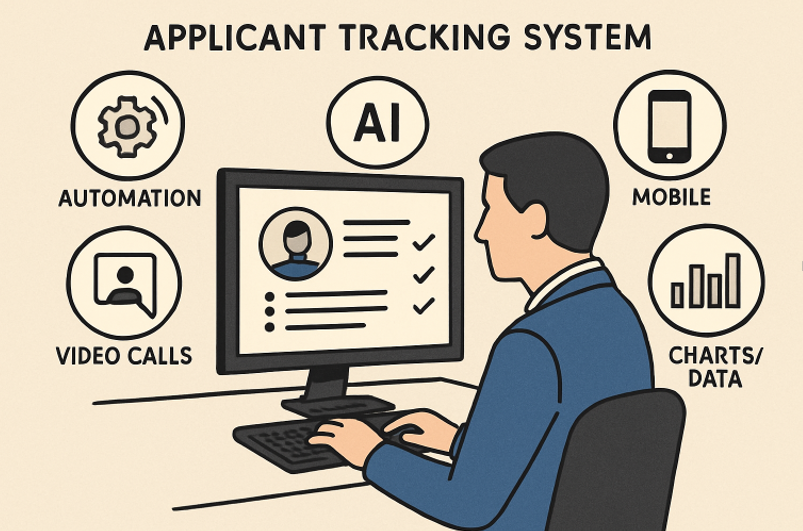
The advanced integration of artificial intelligence has transformed the functionality within Applicant Tracking Systems. AI-driven modules can efficiently analyze multilingual and nonstandard resumes, identifying key skills, experiences, and cultural fit—even when information is presented in unconventional ways. More than just scanning for keywords, top systems evaluate a candidate’s likelihood to excel based on soft skill patterns and behavioral data, helping recruiters focus their attention where it matters most.
On some platforms, AI also powers chatbots that answer candidate queries in real-time, dramatically improving the applicant’s overall impression and keeping them engaged throughout the hiring process. By reducing human bias through anonymized screening and pattern recognition, AI enhances the fairness of hiring decisions, as noted by SHRM.
Mobile-Friendly Interfaces
As mobile devices have become the primary medium for digital interactions, meeting candidates where they are is non-negotiable. Mobile-optimized ATS interfaces guarantee that job seekers can search for opportunities, upload documents, and complete applications directly from their phones or tablets, at any time of day. Likewise, recruiting teams are empowered with responsive dashboards, ensuring hiring doesn’t slow down outside traditional office hours or when managers are traveling.
This mobile transformation not only expands the reach to passive candidates—who may discover roles during a commute or a break—but also accelerates the process, making top talent less likely to abandon applications midway. Accessibility remains a core component of an effective ATS platform, essential for attracting a diverse and modern workforce.
See also: Efficient Septic Care: Modern Tips for Smooth and Safe Operation
Video Interviewing
Video interviewing bridges the gap between a resume and reality, enabling recruiters to gain insight into a candidate’s personality, communication style, and problem-solving approach early in the process. The ability to conduct asynchronous video interviews eliminates logistical hurdles, allowing candidates to record responses at their convenience—reducing delays and enabling faster decision cycles.
For recruiters, video interviews create standardized evaluation opportunities and help visualize how a candidate will fit with the company culture. As described in a recent Forbes article, integrating video in the hiring process raises transparency and gives all stakeholders confidence in the decision.
Data Analytics
Modern ATS platforms generate comprehensive reports on every stage of the hiring funnel. By tracking key performance indicators such as source of hire, offer acceptance ratio, time-to-fill, and candidate engagement rates, recruitment teams and HR leaders can identify trends, bottlenecks, and opportunities for improvement. These analytics go beyond basic reporting—helping organizations fine-tune job descriptions, identify the most effective advertising channels, and benchmark against industry standards.
Organizations committed to using data to drive decisions ensure hiring is aligned with broader business objectives and that unconscious bias is minimized. The best ATS tools transform this data into actionable insights, promoting greater accountability and strategic planning within the recruitment function.
Conclusion
Applicant Tracking Systems have redefined not just the administrative aspects of recruitment but the core strategy for attracting, assessing, and retaining talent. Through automation, AI, mobile convenience, video integration, and deep data analysis, ATS software empowers organizations to deliver a superior hiring journey for both candidates and recruiters. Looking ahead, companies that invest in these innovations will be equipped to build dynamic, diverse teams and maintain their competitive edge in an ever-evolving talent market.