Innovative Applications of License Plate Recognition Technology
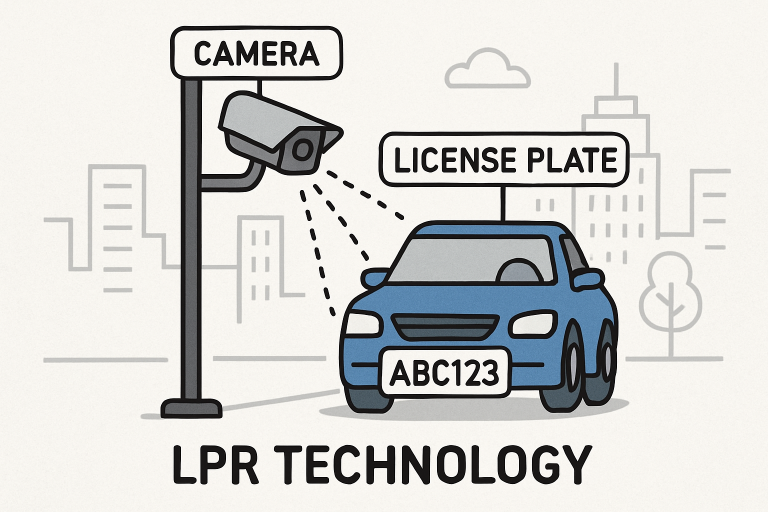
License Plate Recognition (LPR) technology has evolved from a niche tool for monitoring speeding vehicles into a cornerstone of smart city infrastructure. Today, these systems are reshaping public safety, efficiency, and the way organizations interact with cars. Industries and municipalities are increasingly relying on license plate recognition technology for parking enforcement, intelligent traffic management, and seamless services that enhance the experience for both drivers and the broader community.
LPR’s versatility drives this expanded functionality: by rapidly identifying and cataloging vehicle plates, organizations can automate manual processes, safeguard public spaces, and gather actionable data in real-time. As artificial intelligence and high-resolution imaging converge, the accuracy and potential of LPR continue to evolve, making it a vital asset for cities, businesses, and service providers seeking enhanced efficiency and security.
Enhancing Traffic Management
Intelligent transportation systems are heavily reliant on the data and automation provided by LPR technology. Cities can monitor real-time traffic flow, analyze bottlenecks, and identify congestion points, allowing authorities to make informed decisions about signal timings and traffic control measures. When LPR is paired with adaptive signal platforms, green light durations can be dynamically optimized, reducing overall commute times and lowering vehicle emissions. This capability helps metropolitan areas address urban mobility challenges while providing valuable data for future infrastructure planning.
Bolstering Public Safety
Law enforcement agencies have embraced LPR to prevent and respond to crime more effectively. A notable example is the Clovis Police Department in California, which has integrated LPR into its Real-Time Information Center to support rapid officer response and enhance situational awareness during incidents. This integration has proven crucial for identifying stolen vehicles, tracking suspects, and minimizing response times during emergencies. As reported by leading industry publications, such expansion of LPR technology has contributed to noticeable reductions in crime rates in several communities.
Streamlining Parking Solutions
LPR offers transformative possibilities for parking management providers and facility owners. Automated entry and exit based on plate recognition eliminates the need for physical tickets, speeding up access and reducing bottlenecks to enhance the overall user experience. This hands-free system is particularly valuable in high-traffic environments, such as airports, hospitals, and urban centers, where streamlined processes are crucial. The data generated by LPR systems also enables more effective enforcement by automatically identifying vehicles authorized for entry, helping reduce parking violations and lost revenues.
Revolutionizing Car Wash Services
The car wash industry now leverages LPR to deliver convenient, personalized, and contactless services. By enrolling vehicles using plate recognition, customers can access membership benefits and pay for washes automatically—no need for cards or tokens. Innovative Control Systems has advanced industry standards by introducing an AI-driven LPR solution that identifies nearly every vehicle with exceptional accuracy and speed. This not only speeds up the customer experience but also reduces queues and improves membership retention for car wash operators.
Advancing Campus Security
Educational institutions seek to create safer campus environments, and LPR has become a valuable addition to their security arsenal. Universities, such as Louisiana Tech, have installed solar-powered LPR cameras to monitor vehicle entry and movement continuously. These cameras produce clear, high-resolution images—essential during investigations of campus incidents, such as unauthorized access or hit-and-run accidents. The automation and accuracy of LPR systems provide campus police with vital real-time information, improving community safety and expediting responses to suspicious activity.
Improving Toll Collection
LPR technology plays an essential role in upgrading toll roads and highways. By instantly identifying vehicle plates at toll booths, LPR enables cashless, high-speed tolling, minimizing delays and reducing congestion. Drivers benefit from a smoother commute, while toll operators save on labor and reduce the risk of errors inherent to manual data entry. These systems also support dynamic tolling, allowing for the adjustment of fees based on time, traffic, or vehicle type, thereby contributing to more efficient roadway use and a fairer distribution of infrastructure costs.
Facilitating Border Control
Border agencies worldwide have turned to LPR for automating the monitoring of vehicles passing through checkpoints. LPR technology enables the swift screening of inbound and outbound traffic, automatically flagging vehicles listed on national or international watchlists. This enhances security and ensures compliance with customs and immigration regulations while maintaining a steady traffic flow across sensitive border crossings. The adoption of LPR has become a standard practice in modern border management, helping curb smuggling and ensuring national security.
Conclusion
The evolution of License Plate Recognition (LPR) technology underscores its versatility and increasing importance across various sectors. What began as a tool for basic vehicle identification has evolved into an essential system that enhances parking management, streamlines toll collection, and strengthens law enforcement efforts by enabling faster and more accurate data retrieval. In commercial settings, LPR supports access control, fleet monitoring, and improved customer experiences. Its role in public safety continues to expand as cities adopt more intelligent infrastructure. With ongoing advancements in artificial intelligence, machine learning, and high-precision imaging, LPR’s accuracy and applications will continue to accelerate, positioning it as a core element of modern smart cities and forward-thinking businesses.