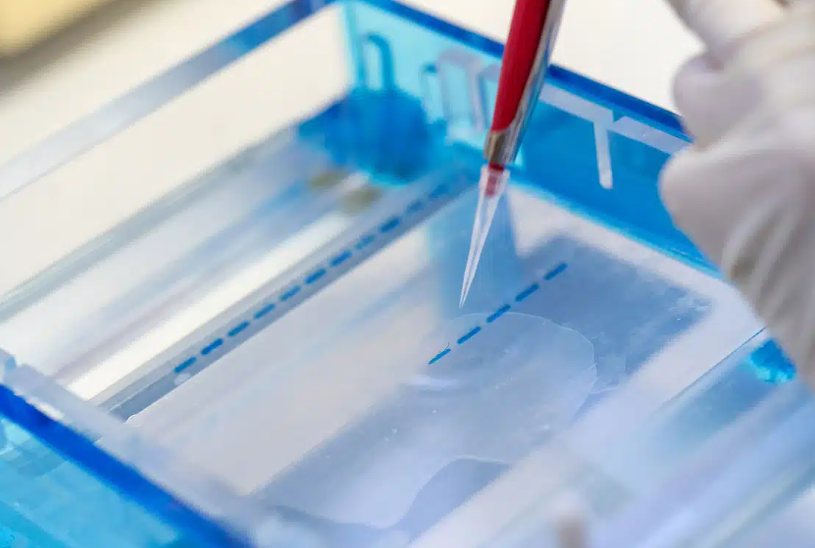
Streamlining Research with Assay-Ready Cells and Bulk Cell Pellets
The relentless pursuit of scientific discovery often hinges on the efficiency and reliability of experimental models. In the fast-paced world of drug discovery, toxicology screening, and disease modeling, researchers are constantly seeking ways to accelerate their work without compromising data integrity. Two powerful tools have emerged as game-changers in this regard: assay-ready cells and bulk cell pellets. These innovations are transforming how laboratories approach cell-based assays, offering significant advantages in terms of time, cost, and consistency.
Imagine eliminating the tedious and time-consuming steps of cell culture maintenance, expansion, and quality control. This is precisely the promise of assay-ready cells – cryopreserved cell lines that are pre-qualified, standardized, and ready for immediate use in experiments. Similarly, bulk cell pellets provide a convenient and concentrated source of cells, ideal for downstream applications like protein extraction, DNA/RNA isolation, and biomarker discovery. This article delves into the transformative impact of these resources, highlighting their benefits and practical applications in modern research.
The Bottleneck of Traditional Cell Culture
For decades, traditional cell culture has been the cornerstone of biological research. While indispensable, it presents several inherent challenges:
- Time-Consuming Maintenance: Propagating and maintaining cell lines requires significant time, labor, and specialized expertise. Daily media changes, passaging, and monitoring for contamination divert valuable research hours.
- Variability and Inconsistency: Different researchers, even within the same lab, can introduce subtle variations in cell culture techniques, leading to inconsistencies in experimental outcomes. This variability can compromise reproducibility and complicate data interpretation.
- Contamination Risks: The open nature of traditional cell culture makes it susceptible to bacterial, fungal, and mycoplasma contamination, which can invalidate experiments and necessitate costly restarts.
- Resource Intensive: Maintaining a large cell culture facility demands significant investment in incubators, laminar flow hoods, reagents, and trained personnel.
These challenges often create bottlenecks in research workflows, particularly in high-throughput screening environments where rapid and reliable results are paramount.
The Rise of Assay-Ready Cells: Precision at Your Fingertips
Assay-ready cells are a pre-validated, cryopreserved solution designed to circumvent the limitations of traditional cell culture. These cells are typically supplied in vials, ready to be thawed and immediately plated for experiments. The benefits are multifaceted:
- Significant Time Savings: Researchers can bypass weeks of cell expansion and characterization, directly moving to experimental setup. This acceleration is crucial for projects with tight deadlines or in high-throughput screening campaigns.
- Enhanced Reproducibility and Consistency: Assay-ready cells are produced under stringent quality control standards, ensuring uniformity across batches. This standardization minimizes inter-experiment variability, leading to more reliable and reproducible data. For example, when working with a sensitive cell line like A2780, known for its relevance in ovarian cancer research, consistent cell quality is paramount for accurate drug sensitivity testing.
- Reduced Contamination Risk: The closed system of cryopreservation and immediate use minimizes exposure to environmental contaminants, safeguarding experimental integrity.
- Cost-Effectiveness: While the initial cost per vial might seem higher than self-culturing, the savings in labor, media, reagents, and avoided experimental repeats often make assay-ready cells a more economical choice in the long run.
- Simplified Logistics: Labs with limited cell culture infrastructure or personnel can access a wide range of cell lines without the overhead of maintaining them in-house.
A study published in Journal of Biomolecular Screening highlighted that the adoption of assay-ready cells in drug discovery pipelines reduced assay development time by up to 50%, demonstrating their profound impact on research efficiency.
Bulk Cell Pellets: A Concentrated Resource for Downstream Analysis
Beyond live cell assays, the demand for high-quality, consistent cellular material for molecular analysis is ever-growing. Bulk cell pellets address this need by providing a concentrated aliquot of cells, typically cryopreserved, for a variety of downstream applications:
- Genomic and Proteomic Studies: Bulk cell pellets are an ideal starting material for extracting DNA, RNA, and proteins for sequencing, qPCR, Western blotting, and mass spectrometry. The consistent cell count per pellet ensures comparability across samples.
- Biomarker Discovery: For projects focused on identifying novel biomarkers, having access to large, standardized quantities of specific cell types, such as A2780 for ovarian cancer, can significantly expedite the discovery process.
- High-Throughput Sample Preparation: In large-scale studies requiring hundreds or thousands of samples, bulk cell pellets streamline the sample preparation workflow, saving considerable time and effort compared to processing individual cell cultures.
- Biobanking and Archiving: Researchers can create comprehensive biobanks of various cell lines or primary cells in pellet form, ensuring long-term availability for future research endeavors.
The convenience of bulk cell pellets lies in their ready-to-use format, eliminating the need for researchers to grow large quantities of cells themselves before lysis or extraction. This is particularly beneficial when dealing with difficult-to-culture or slow-growing cell lines.
Actionable Tips for Integrating These Tools into Your Research
To maximize the benefits of assay-ready cells and bulk cell pellets, consider these actionable tips:
- Define Your Needs Clearly: Before purchasing, precisely determine the cell line, quantity, and specific application. For example, if your research focuses on platinum-sensitive ovarian cancer, ensure you specify A2780 cells.
- Prioritize Quality Control: Always opt for suppliers with rigorous quality control standards, including mycoplasma testing, cell viability, and functional validation.
- Optimize Thawing Protocols: While assay-ready cells are designed for ease of use, correctly following thawing protocols is crucial for maintaining cell viability and function.
- Plan for Storage: Ensure adequate cryopreservation facilities for storing both assay-ready cells and bulk cell pellets to maintain their integrity.
- Cost-Benefit Analysis: Conduct a thorough cost-benefit analysis comparing the upfront cost of these products against the savings in labor, reagents, and avoided experimental repeats.
Conclusion: A New Era of Cellular Research
The advent of assay-ready cells and bulk cell pellets marks a significant leap forward in cellular research. By addressing the inherent challenges of traditional cell culture, these innovations offer unprecedented levels of efficiency, consistency, and reproducibility. Whether you are conducting high-throughput drug screening, delving into complex disease mechanisms using models like A2780, or performing large-scale molecular analyses, these tools empower researchers to accelerate discovery, generate more robust data, and ultimately, bring us closer to breakthroughs in medicine and biology. Embracing these advanced cellular solutions is not just about convenience; it’s about elevating the standard of scientific research itse