Lowering Energy Bills Through Regular HVAC Maintenance
Table of Contents
- Clean Air Filters: A Simple Step with Big Impact
- Annual Tune-Ups: Preventive Care for Optimal Performance
- Seal and Insulate Ductwork: Stop Energy Loss in Its Tracks
- Smart Thermostats: Intelligent Temperature Management
- Keep Coils Clean: Ensure Efficient Heat Exchange
- Maintain Outdoor Units: Unobstructed Airflow Matters
- Zoning Systems: Targeted Heating and Cooling
- Conclusion
Keeping your home or workplace comfortable year-round relies heavily on the efficiency of your heating, ventilation, and air conditioning (HVAC) system. One of the most effective ways to maintain that efficiency is through regular HVAC maintenance. When systems are routinely inspected, cleaned, and tuned, they operate more smoothly, which can directly translate into lower energy consumption and reduced utility bills. Small issues, such as clogged filters, worn belts, or minor leaks, may seem insignificant but can force your HVAC system to work harder than necessary, driving up energy costs over time.
Routine maintenance also helps prevent sudden breakdowns that could require emergency HVAC repair. By identifying potential problems early, you reduce the likelihood of unexpected failures and the high costs associated with urgent fixes. Overall, investing time in consistent upkeep ensures your system runs efficiently, prolongs its lifespan, and keeps energy expenses in check without sacrificing comfort.
Clean Air Filters: A Simple Step with Big Impact
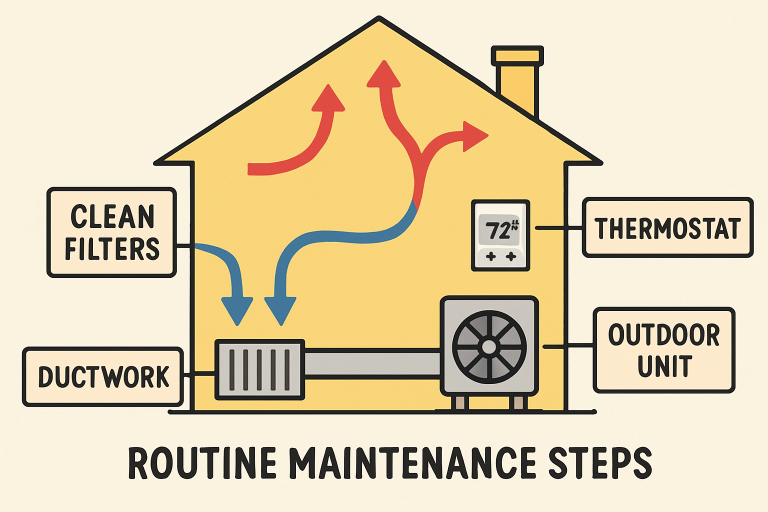
Regularly changing HVAC filters is an affordable maintenance measure often neglected. Filters capture dust, pollen, pet hair, and airborne particles but can become clogged over time, restricting airflow. This makes the system work harder, raising energy consumption. Replacing a dirty filter can cut an air conditioner’s energy use by up to 15%, reducing costs and wear, and potentially prolonging its life. Clean filters also enhance indoor air quality, benefiting people with allergies or respiratory issues. During high-use seasons or in homes with pets, check filters monthly.
Annual Tune-Ups: Preventive Care for Optimal Performance
Annual HVAC inspections by skilled professionals are essential for optimal system performance. During these tune-ups, technicians check refrigerant levels, tighten electrical connections, lubricate parts, calibrate thermostats, and clean surfaces. Neglecting these tasks can lead to inefficiency and costly repairs. For instance, low refrigerant can cause continuous operation, while loose wires may pose safety risks. Regular maintenance can improve efficiency by 10 to 15 percent, extending your system’s lifespan and helping you anticipate potential breakdowns and plan replacements.
Seal and Insulate Ductwork: Stop Energy Loss in Its Tracks
Air ducts are essential for distributing climate-controlled air in heating and cooling systems. However, leaks and poor insulation can cause a loss of up to 30% of air, especially in attics, basements, or crawl spaces. Sealing ducts with mastic or metal tape and insulating exposed areas helps retain conditioned air, improving energy efficiency and comfort. Well-sealed ducts also reduce moisture condensation and prevent dust and allergens from entering your home. Professional duct inspections can identify hidden issues, leading to additional savings and increased comfort.
Smart Thermostats: Intelligent Temperature Management
Smart thermostats significantly enhance energy efficiency and reduce heating and cooling costs. Unlike manual thermostats, they learn your daily routines and adjust accordingly, only operating when necessary. With Wi-Fi connectivity, you can control them via smartphone even when away from home, reducing wasted energy. Over time, they optimize temperature settings to maximize savings, often cutting monthly utility bills by 10 percent or more while adding convenience and comfort.
Keep Coils Clean: Ensure Efficient Heat Exchange
The evaporator and condenser coils in your HVAC system are vital for heat transfer. When dust and grime accumulate on the coils, they create an insulating barrier, forcing the system to work harder and consume more energy. Regular cleaning of both indoor and outdoor coils helps maintain efficiency, reduces mechanical issues, and prevents airflow restrictions. It’s recommended to inspect and clean the coils at least once a year, ideally during professional maintenance visits.
Maintain Outdoor Units: Unobstructed Airflow Matters
Keep your outdoor HVAC unit free of debris, overgrown plants, and obstructions to ensure good airflow. Trim surrounding plants and keep at least two feet of space around the unit to help the compressor and fan operate efficiently, saving energy and prolonging the unit’s lifespan. Routine outdoor maintenance decreases noise levels, prevents overheating, and helps avoid expensive repairs.
In addition to regular maintenance, addressing issues promptly can prevent minor problems from escalating into costly repairs. If you notice unusual noises or reduced efficiency, it might be time to search for a reliable service provider. A quick search for furnace repair near me can connect you with local experts who can diagnose and fix issues before they become major headaches. This proactive approach not only extends the lifespan of your HVAC system but also ensures it operates at peak efficiency, keeping your home comfortable and your energy bills in check. Remember, timely intervention is key to maintaining a well-functioning system.
Zoning Systems: Targeted Heating and Cooling
Larger or multi-level homes often face uneven heating or cooling, with hot upstairs areas and cool downstairs rooms. Zoning systems effectively address this by dividing the home into separate climate-control zones, each with its own thermostat and dampers. This allows you to heat or cool only occupied areas, reducing energy waste and enhancing comfort. For instance, you can keep bedrooms cooler at night while warming common areas during the day. As a result, your HVAC system runs less often, leading to lower energy bills. While installing zoning in an existing home may need professional help, the comfort and savings can make it worthwhile.
Conclusion
Regular HVAC maintenance is more than just preventing failures; it’s a strategic approach that helps homeowners save costs, boost comfort, and ensure a healthy indoor environment. Small actions, like replacing filters or switching to a smart thermostat, can lead to annual savings. Consistent upkeep and expert inspections extend equipment lifespan, prevent expensive repairs, and help keep the home comfortable and budget-friendly. Don’t wait for minor problems to escalate; make HVAC maintenance a priority now for a cozier home and lower energy costs year-round.